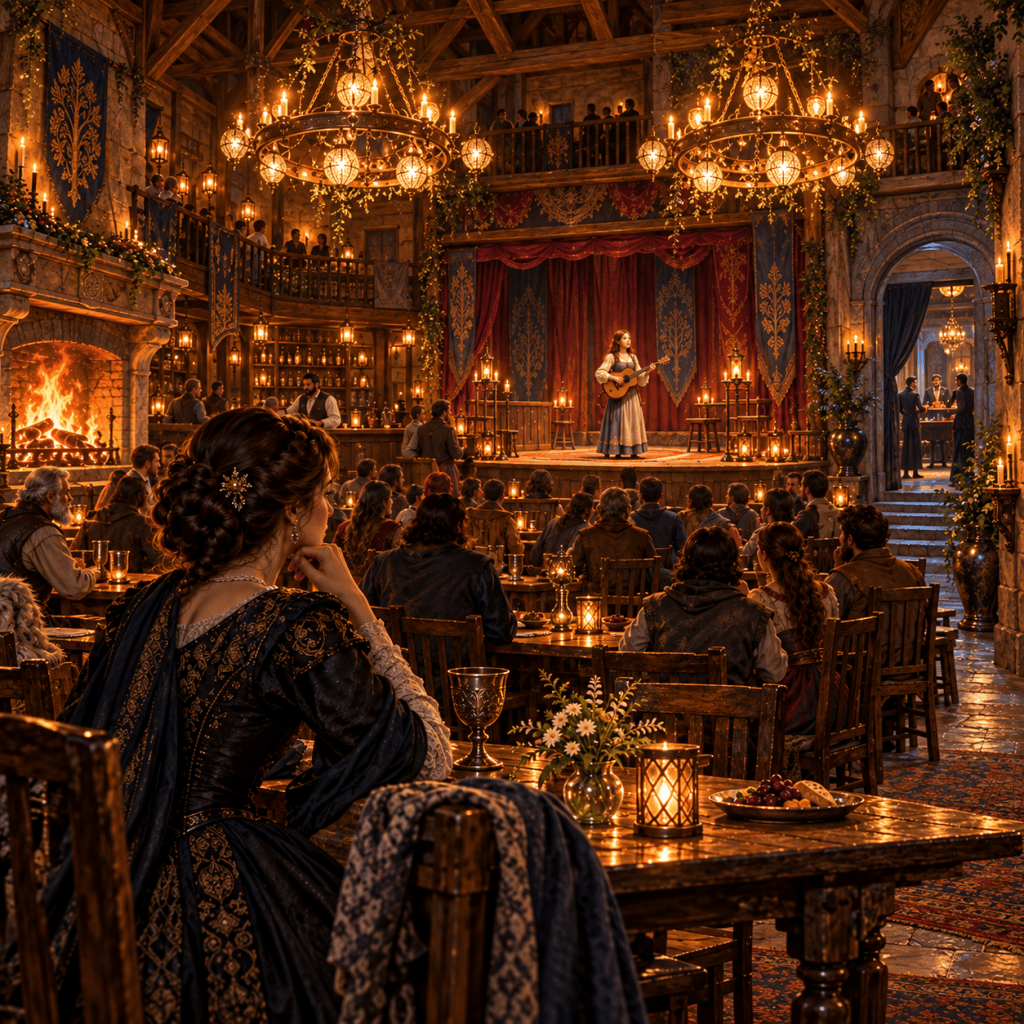
The Grey House, named in honor of my father, Lord Grey Blackwood, had been part of my life long before it became the home of House Blackwood. Its tavern filled the front of the building like a great hall. Wooden tables and chairs lined the floor, with smaller seating spaces along the walls for quiet conversations. A vast stone hearth dominated the room, its fire roaring through winter and its grate standing empty in summer. Magical chandeliers kept the hall bright, and the bar kept everyone supplied with drink. A large stage stood at the back of the hall. Beyond the tavern lay the inn to the left and the kitchens at the center. House business was conducted on the third floor.
Before I married into the Queen’s family, I sometimes took that stage myself. I sang for the customers, made them laugh with stories, and stunned them with my readings. When I married the Archduke ten years ago, I stepped away from performing. I kept the stage alive with minstrels, acting troupes, and, on quieter nights, members of my staff, but I never stopped missing it.
A little after the plague six years ago, my husband was diagnosed with his wasting disease. I took a wager and used some emergency funds I had set aside for uncertain times to expand the Grey House. That was how the Grey Room was born. I knew the expansion had to make a profit, so I built a casino there. The venture succeeded, and the Grey Room turned a profit.
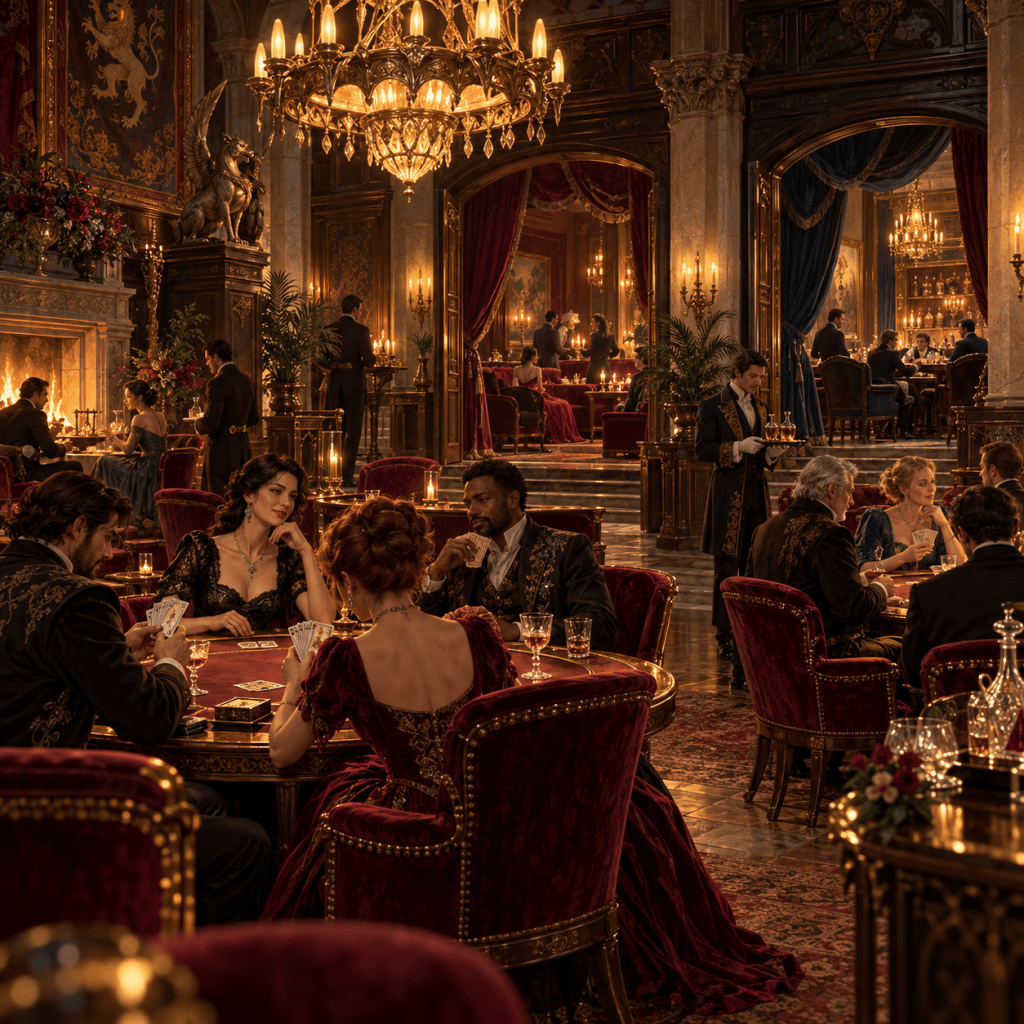
The new wing stood to the right of the kitchens. Despite its name, the Grey Room was no single room. Established members of House Blackwood came to drink, play cards, and talk, while chambers at the back offered greater privacy to the House’s highest-ranking members and the noble family. Each chamber held velvet seating, its own bar, and a table for games or confidential discussions. A bell summoned a porter, though if anyone remained inside too long, I checked on them myself.
The Crown knew about the Grey Room. It disapproved of the gambling, but the place suited its purposes, so it left us undisturbed. My father no longer played games of chance. I knew what his addiction had taken from our family, and I understood what a well-run gaming house could return to it. The house always wins. This time, I was the house.
As my husband’s disease left him weaker, I visited the Grey House more often. My father had not included the tavern in my dowry, but the Crown knew it helped keep us afloat. My visits were tolerated, though the Queen had other ideas about what was proper for her brother’s wife.
By then, a decade had passed since I had taken the stage. Whenever I watched my fifteen-year-old runner, Celia, perform, I remembered doing much the same at her age. A dull ache would settle in my chest.
Then word of the Challenges of Wit began to spread. I saw the possibility of earning more coin. I saw a stage, too, and wondered whether I might finally take my place on one again.


Leave a comment