
Veronica
Aaron and I met up one more time before his flight back to New Jersey. He was in town for a conference, with a speaking engagement at one event and moderating duties at another, so his time wasn’t entirely his own.
It was nice catching up with him—to remember who I had been and recognize what had changed. I wasn’t that defenseless child anymore. I was an adult with authority over my own decisions, including what I would and would not tolerate.
That realization meant I had some hard decisions to make.
My father called a few days later to ask when I would be flying out to see him. He lived in Shreveport, a riverboat casino town about four hours from Dallas by car. Before the riverboat casinos came in, it had been strictly a military town, centered around Barksdale Air Force Base.
How Dad ended up there involved a woman, her four daughters, and a request to help with their newly opened Chinese restaurant in the middle of nowhere. That restaurant became one of the best in the state, earning local fame and, eventually, James Beard recognition.
The family story, however, involved three failed relationships, an older sister running away with her younger sister’s husband, and one death.
I had lived there with them for a year and left before everything went belly up. My father emerged relatively unscathed, but after escaping that mess by the skin of his teeth, he decided to swear off relationships.
“So, when are you coming?” Dad asked over the phone.
“At the end of the month. I’ll get your phone updated and see Grampa.”
“He’s not doing well. The doctors say it isn’t good.”
Grampa was one of the main reasons for the trip. He had moved to Shreveport to be near his sons after two of my younger uncles left New Jersey to work with my father.
Dad had always been their protector. He helped them find jobs, join the labor union, and get legal help when they were bullied. Both were partially deaf, and navigating life in the United States with limited English put them at a considerable disadvantage.
The rest of the month passed quickly. Before I knew it, Simon was dropping me off at the airport. After an hour-long flight to Atlanta, a layover, and another flight, I arrived in Shreveport.
My father was there to meet me. He was getting older, but he was still spry and walked faster than people half his age. He gave me a hearty hug, took my luggage, and drove me home.
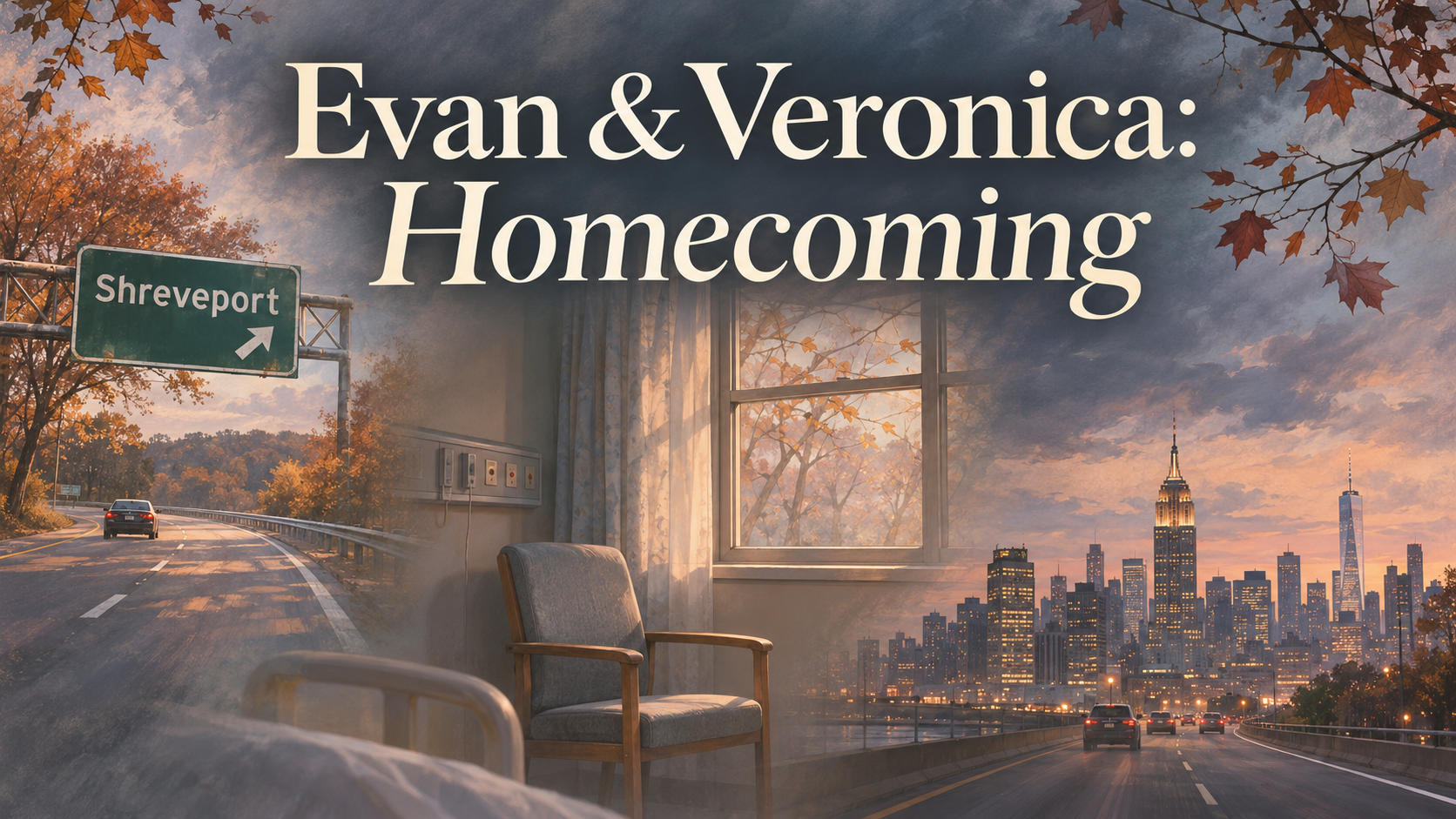
Along the way, I snapped a picture of a highway sign marked “Shreveport” and posted it to my socials.
“I’m back.”
Despite earning a decent living, Dad lived in a rundown house he had bought from a military man who was leaving the state after retiring from the service. He had supposedly gotten it cheap, although, considering its condition, I wasn’t sure how much of a bargain it had been.
There were holes in the bathroom floor. The laundry room’s back door had long since broken, and the front yard was a mess.
My father and his brothers were not decorators. They favored function over form, although their choices often served an immediate need at the expense of long-term upkeep. They meant well, but as long as they had a roof over their heads and food on the table, everything else could wait.
Dad gave me his bedroom and took the spare room he had once used to house restaurant staff.
For Chinese restaurants out in the boondocks, that was often how hiring worked. Owners placed ads in Chinese-language newspapers in New York, Atlanta, D.C., Los Angeles, or other cities with large Chinese immigrant communities. They offered travel, room and board, and a job. Workers learned to cook and prepare food on-site, usually working six or seven days a week.
It was a familiar arrangement: restaurants in places with small or nonexistent Chinese communities recruited workers from cities where newcomers were looking for a start.
My father now worked as the head Chinese chef at one of the casinos, so he no longer needed to keep rooms available for employees. The house was quiet.
My two uncles lived with Grampa to help care for him and keep him company when they weren’t working. The last time I had seen him, he was in his nineties and spent most of his time in his recliner, watching Chinese television or Wheel of Fortune.
Now he was in the hospital with liver failure.
We were going to see him the next day.
When we arrived, my grandfather’s skin was yellow. I later learned the word for it was jaundice. His liver was failing, and I was told his health had been declining for months.
I couldn’t help wondering whether moving away from everything he knew had contributed to his decline, but I held my tongue.
We stayed for several hours. I translated between the doctors, my father, and my uncles until my youngest uncle arrived. He was as fluent in English as I was.
Grampa had requested hospice care. All we could do now was make his remaining time as comfortable as possible.
I had tremendous respect for him. Of all my grandparents, he had been the most involved in my life. He had watched me grow up, helped take care of me, and been there throughout my childhood. Part of that was because I was the eldest grandchild, but I had also lived the closest.
As it turned out, I was the last grandchild to see him before he passed away.
I flew back to Florida a few days later.
The day before Thanksgiving, my grandfather died.
I flew back to New York for the funeral in New Jersey, where my grandmother had been laid to rest nearly ten years earlier. I felt as though I might fall to my knees and cry, but I held myself together for the family.
Afterward, as we drove back into New York City, I took a photograph of the skyline and posted it with a single word.
“Homecoming.”